Heather Rock Garden Design: Layout, Soil, and Companion Plants
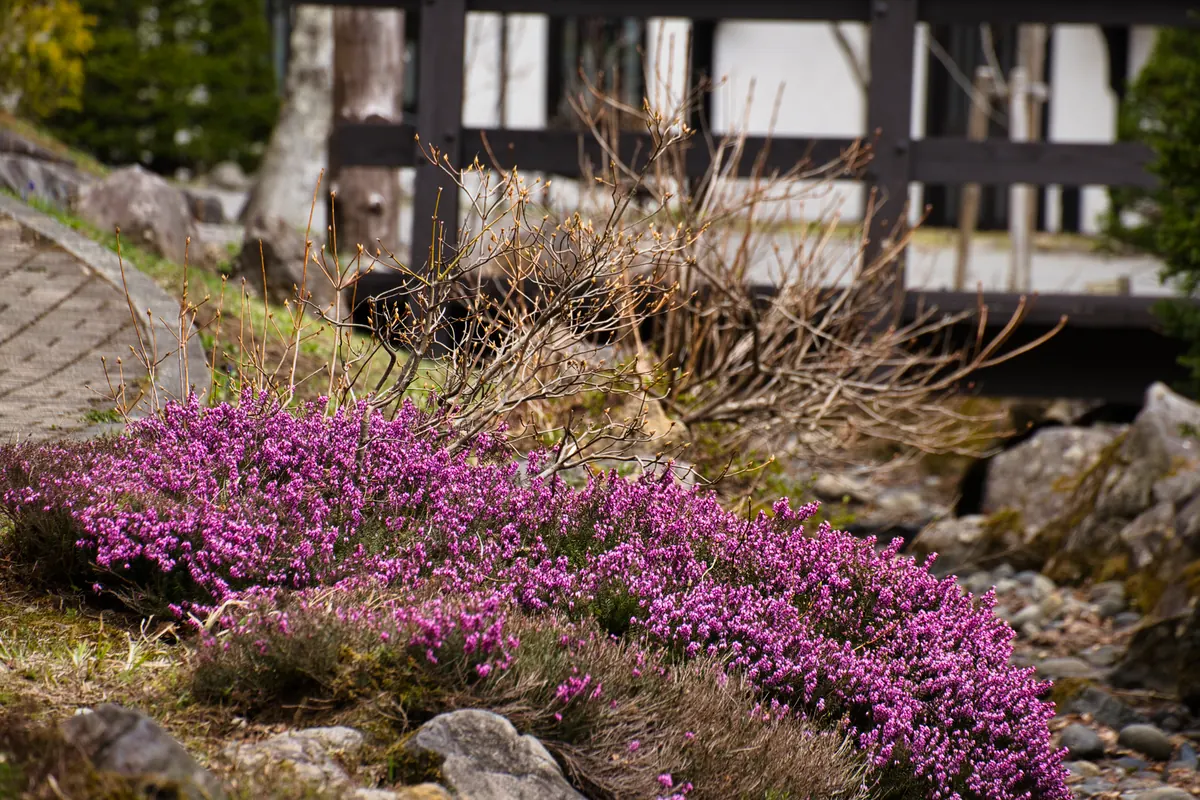
Heather and stone have been companions for a very long time. On upland moors the two have worked out an arrangement: thin acidic soil, constant drainage, roots kept cool under a low evergreen canopy, wind doing the rest. Copy that arrangement in a garden — on a slope, a raised bed, or a sunny bank — and heather settles in with very little fuss. Get the soil chemistry wrong, though, and it sulks, browns off, and dies in its second winter. The good news is that everything heather needs can be built before a single plant goes in.
Start With the Ground: Slopes, Levels, and Drainage
Water is the main enemy. Heather tolerates drought, wind, poor soil and salt air, but it will not sit in wet, heavy ground over winter. If you have a natural slope of about one in five, you already have the ideal site. If your ground is flat, build the slope yourself — a mound or raised bed lifted 30–40cm above the surrounding soil is enough.
Underneath every rock garden should be a rough drainage layer. Broken bricks, rubble, coarse gravel, or old stone offcuts work well, topped with a layer of gritty soil. Anything you bury will feed the roots and keep the water moving sideways rather than pooling. An open, sunny spot facing south or west suits most heathers; light shade is acceptable for Erica carnea, but flowering suffers in deep shade.
The Soil Mix Heather Actually Wants
Most heathers are lime-haters. Calluna vulgaris, Erica cinerea and Erica vagans want genuinely acidic ground, roughly pH 4.5 to 5.5. Erica carnea and its hybrid Erica × darleyensis are more forgiving and will cope with slightly limy or neutral soil, which makes them the sensible choice for gardens on chalk.
A reliable planting mix for a raised rock garden is roughly equal parts acidic (ericaceous) compost, coarse horticultural grit of about 6mm, and garden loam, with a handful of leaf mould stirred through. The grit is not decoration — it opens the mix so rain passes straight through and air reaches the roots. A cheap pH test kit will tell you what you are starting with, and it is worth the small outlay before you plant anything.
Things to keep out of the mix and off the surface:
- Mushroom compost and spent mushroom compost — both are alkaline.
- Fresh manure, which burns fine roots and holds too much water.
- Bonfire ash, which raises pH sharply.
- Heavy clay topsoil, unless it is thoroughly broken up with grit.
In hard-water areas, rainwater from a butt is far kinder than tap water, especially through a dry summer.
Laying Out the Rock
Rocks should look as though they belong there, not as though they were delivered. Choose stone that matches your local geology if you can — sandstone, slate, granite, limestone chippings used only as a mulch for lime-tolerant plantings. Avoid mixing three different stone types in one bed; the eye reads it as clutter rather than landscape.
A simple sequence for building the structure:
- Set the largest stones first, burying at least a third of each one so it appears to emerge from the ground.
- Tilt every stone slightly back into the slope, so water runs into the bed rather than off it.
- Keep the grain of the stone running the same way across the bed, as it would in a natural outcrop.
- Group stones in threes rather than spacing them evenly, and leave generous pockets of soil between them.
- Firm each stone with a rubber mallet and check it does not rock before moving on.
Those soil pockets are where the planting happens. Wide, shallow crevices suit alpines; deeper pockets take a heather or a dwarf shrub.
Planting Heather in Drifts
One heather on its own looks lost. Odd-numbered groups — three, five, seven of the same cultivar — read as intentional and knit together far faster. Space Calluna about 30–45cm apart and the low, spreading Erica carnea at 25–30cm, so the plants close their gaps within two or three seasons.
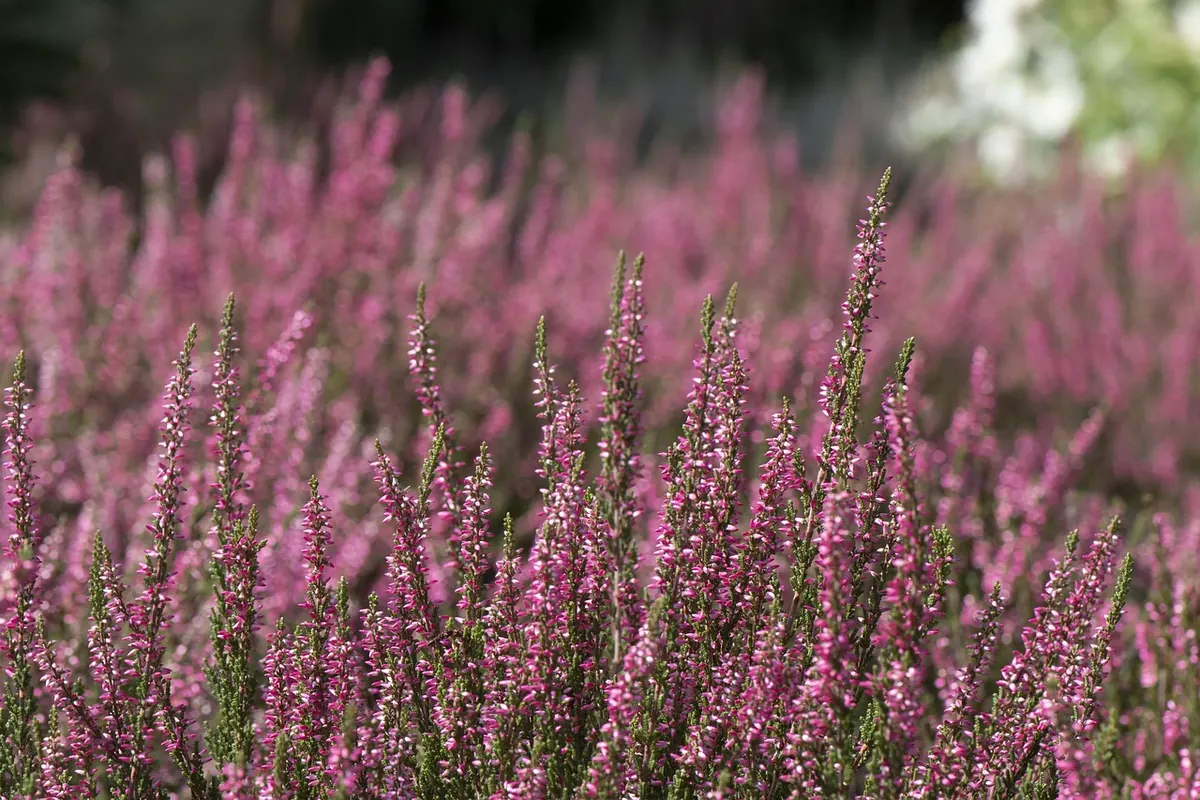
Colour is where heather earns its keep. Foliage ranges from near-black through bronze, gold and silver, and flower colour runs white, pink, magenta and purple. Repeat a gold cultivar such as a yellow-leaved Calluna two or three times across a bed instead of using it once, and the design holds together. Plant in autumn or early spring, tease out the roots, and set the rootball so the top sits just below the grit surface. Water in, then top-dress with grit to keep the collar dry and the weeds down.
Companion Plants for a Heather Rock Garden
The best companions are plants that want the same things: sun, grit, sharp drainage and lean soil. Alpines are the natural partners — saxifrages and houseleeks tucked into crevices, creeping phlox and dwarf campanula spilling over stone, alpine thyme and armeria filling the front edge. Small bulbs are worth the effort too: crocus, snowdrops and Cyclamen hederifolium come up through the heather mat and give you flowers in the months when heather is quiet.
For structure, add one or two dwarf conifers — a mop-headed pine, a compact juniper, a slow-growing spruce — or a dwarf willow. They hold the composition in winter when the heathers are simply cushions of colour. A few tufts of blue fescue or carex lighten the edges.
What to leave out: lavender, rosemary, bearded iris,大多数 of the grey-leaved Mediterranean herbs and anything labelled as needing lime. They will look right for a season and then decline as the soil pulls against them.
If a plant's label says "lime tolerant", it does not belong in the acid half of the rock garden. Keep the lime-lovers on the other side of the path.
Pruning and Yearly Upkeep
Heathers grow leggy and bare if you never touch them, and they do not regrow from old wood. Shear Calluna in early spring, cutting back to just below the spent flower spikes. Trim Erica carnea after it finishes flowering in late spring. Take your time, use sharp shears, and never cut into the bare brown stems at the base — that is where the plant stops recovering.
Top-dress each spring with a thin layer of composted bark or leaf mould, never manure. Water newly planted heathers through their first dry summer with rainwater, then leave them largely alone. Hand-weed rather than hoe: heather roots are shallow and resented disturbance.
A Planting That Improves With Age
Build the drainage first, get the pH right, and bury the rocks properly — then the design does the work for you. Heather rock gardens are at their best in their fourth or fifth year, when the drifts have merged and the alpines have seeded into the crevices. Start with a small bed, one slope and half a dozen plants. If that patch thrives, you will know your soil is right, and you can extend it with confidence.
Photo: Zain Abba / Pexels